
Introduction: The Common Mistake
Many law firms begin their marketing efforts by producing content — articles, blog posts, videos, or social media updates — without first establishing a clear structure for how that information should communicate the firm’s experience and expertise.
The result is often a collection of disconnected pieces of content that may contain useful information but fail to communicate a coherent professional identity. Without structure, even well-written content struggles to convey authority.
Effective legal visibility begins with strategy and structure before individual pieces of content are created.
Content Without Structure Creates Noise
Content can educate, inform, and demonstrate expertise. But when content is produced without a clear strategic framework, it often functions as isolated pieces of information rather than part of a larger professional narrative.
A firm may publish blog posts, articles, or videos that individually explain aspects of the law, yet the overall body of work does not clearly communicate:
• what the firm focuses on
• what types of matters it handles
• who the ideal clients are
• why the firm’s experience matters
Without that structure, the content may exist online, but it does not necessarily help potential clients understand why the firm is the right fit for their situation.
The Role of Strategy
A content strategy answers several essential questions before any content is produced:
• What central ideas should be communicated?
• What types of cases and practice areas define the firm’s work?
• Who is the intended audience?
• What information would help those individuals understand the firm’s experience and expertise?
This strategic layer determines how knowledge and experience will be organized so they can be clearly understood by both people and the information systems that guide clients to professional services online.
In other words, strategy determines what the firm’s story actually is.
Content as the Signal of Expertise
Once a clear structure exists, individual pieces of content begin to function differently.
Articles, blog posts, videos, white papers, and presentations are no longer isolated publications. Instead, they become signals that reinforce the firm’s professional focus and experience.
Each piece of content supports the larger structure, helping clients understand the nature of the firm’s work and the types of matters it handles.
When content is created within this framework, it becomes easier for potential clients to recognize the relevance of the firm’s experience to their own situation.
Structured Authority
This relationship between strategy and content forms the basis of what we describe as Structured Authority.
Structured Authority begins with the deliberate organization of professional knowledge. The architecture of the firm’s expertise is defined first. Individual pieces of content then reinforce that structure through repeated signals of experience and insight.
Over time, the consistent communication of that expertise allows both clients and search information systems to recognize the firm’s professional focus more clearly.
Why Structure Comes First
Producing content without structure is similar to constructing a building without architectural plans. Individual components may exist, but they do not form a coherent structure.
When strategy and structure come first, however, each piece of content contributes to a larger framework that communicates experience, focus, and professional judgment.
For law firms handling matters of consequence, that clarity is essential. Clients facing serious decisions are not simply looking for information about the law. They are looking for answers to their questions. They are searching for the right attorney whose experience aligns with the situation they are facing.
Conclusion
Effective legal visibility is not created by publishing large volumes of content. It develops when professional expertise is deliberately organized and consistently communicated over time.
Strategy defines the structure. Content reinforces it.
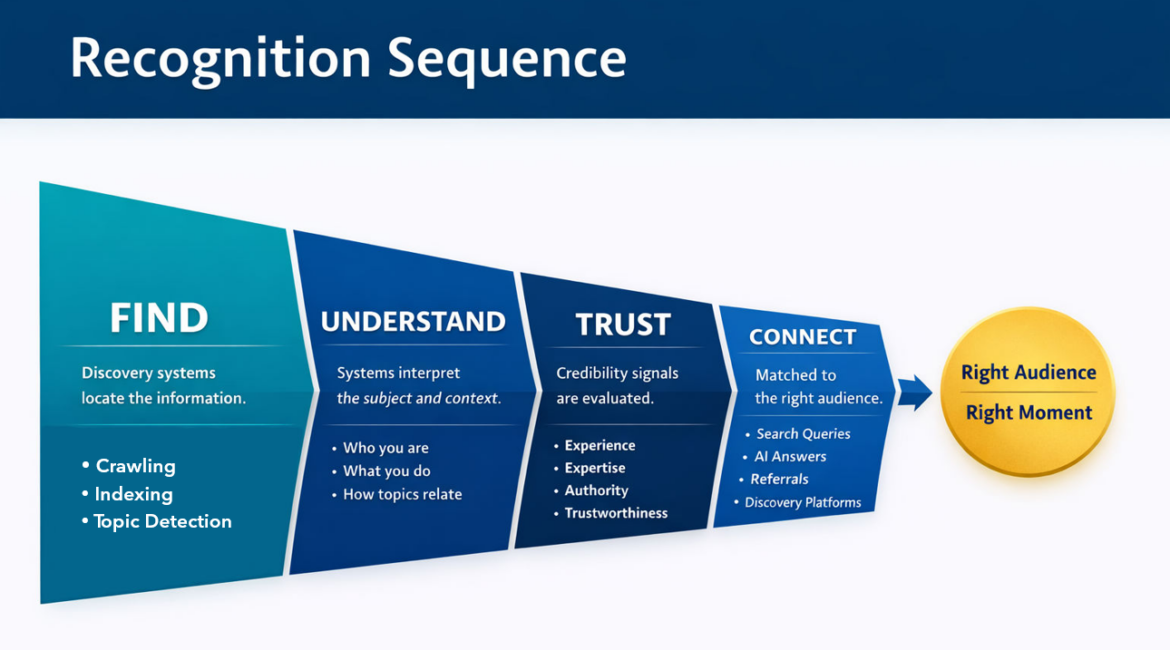
When those elements work together, the firm’s experience becomes easier for information engines to Find, Understand, Trust and Connect with the right potential clients at the right time.
